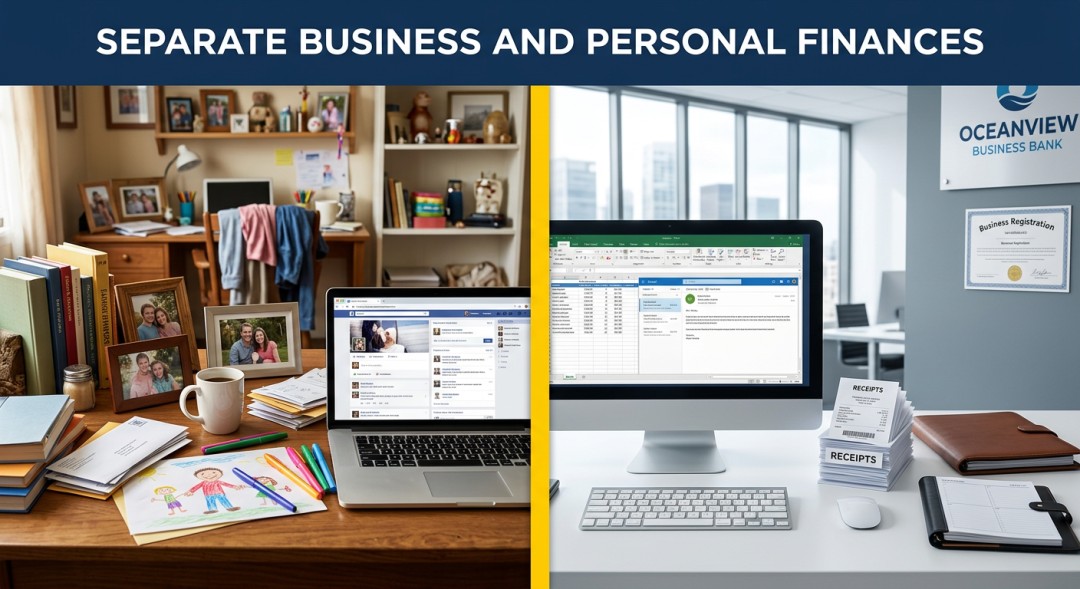
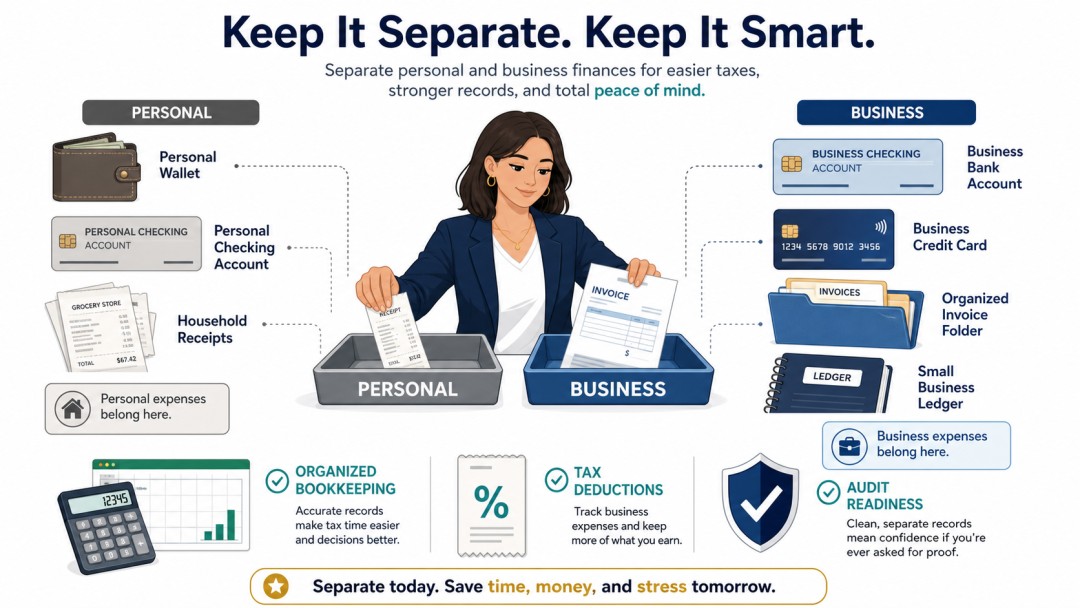
Keeping business and personal money separate is one of the simplest but most powerful moves a small‑business owner can make. Opening one account for work and one for life instantly cuts the noise in your bookkeeping, making taxes, reports, and planning far less messy.
Why separation matters
When business income and personal spending flow through the same bank account, every receipt‑hunting session before tax season becomes a detective story. A clean business account surfaces your real profit, makes expenses easier to categorize, and lowers the risk of errors on your tax return.
Separating funds also strengthens legal protection, especially if you’re structured as an LLC or corporation. Commingling money can blur the line between you and your business, which may weaken limited‑liability protections if something goes wrong.
How to set it up
Start with two checking accounts: one labeled “business” and one labeled “personal.” All client payments, reimbursements, and business‑related deposits go into the business account; all household bills, groceries, and personal spending come from the personal account.
Use business debit or credit where possible, and treat yourself like an employee: pay a regular “salary” or owner’s draw from the business account into your personal account, rather than grabbing cash whenever it feels convenient. This one‑way bridge keeps the books clean and makes your cash‑flow story obvious at a glance.
Making bookkeeping easier
With everything already sorted by account, your accounting software (like QuickBooks, Xero, or even a well‑structured spreadsheet) can import bank‑feed data and categorize transactions with far fewer manual fixes. Monthly reconciliations become routine instead of a quarterly panic, and your accountant will thank you when it’s time to file.
A clear separation also simplifies audits or lender reviews; you can hand over a clean, business‑only record trail instead of a scrambled personal‑plus‑business statement. Over time, that clarity feeds smarter decisions about pricing, growth, and when to bring in help.
If you’d like, I can next draft a short “how‑to” checklist you can hand out to freelancers or small‑biz vendors who work with your festivals and events.